

Thailand stands as one of Asia’s primary agricultural producers, with farming deeply embedded in the nation’s economy and culture. Is Thailand a farming country? The answer lies in its vast agricultural lands, diverse crop production, and significant rural workforce engagement in farming activities. This comprehensive guide examines the current state of agriculture in Thailand and its continuing evolution.
Table of Contents
- Who This Research Serves
- Current State of Thailand’s Agriculture Industry
- Regional Agricultural Characteristics
- Major Agricultural Products
- Thailand’s Agricultural Export Highlights (2024)
- Agricultural Technology and Innovation
- Market Research Value in Agriculture
- Real-World Application: Drone Adoption Research
- Market Access and Export Opportunities
- Sustainable Development
- Future Outlook
- Plan Your Agricultural Research in Thailand
- Conclusion
- References
Who This Research Serves
Thailand’s agricultural sector attracts diverse business interests beyond farming itself. Agricultural research in Thailand serves agritech companies testing adoption barriers among Thai farmers, food processors mapping supply chains and sourcing opportunities, agricultural input suppliers entering the Thai market, agribusiness investors conducting due diligence, and export-oriented producers seeking consumer preference data in target markets. If your business operates at any point in Thailand’s agricultural value chain, the research questions below are ones we actively work on.
For investors and market entrants at the sizing stage, our TAM SAM SOM guide for Thailand covers how to build a defensible market size calculation for Thai agricultural categories.
Current State of Thailand’s Agriculture Industry
Thailand’s agriculture sector contributes significantly to the national economy, employing millions in rural areas. Agriculture in Thailand combines traditional farming methods with modern agricultural technologies, producing rice, cassava, rubber, fruits, and other valuable crops. The sector’s strength lies in its diverse production capabilities and established export markets.
In 2023, Thailand’s agriculture sector represented 9% of GDP, while industrial sectors dominated at 78.6% and other sectors contributed 12.4%. Despite this smaller GDP share, agriculture remains crucial for employment and export revenue, with agricultural exports valued at $49.2 billion in recent years.
Recent developments in Thailand’s agriculture industry show increasing adoption of sustainable practices and technological integration. Farmers increasingly utilize precision farming techniques, while government initiatives support modernization efforts. This evolution helps maintain Thailand’s position as a major global food producer.
Agricultural exports show a contrasting pattern to GDP contribution, with agriculture contributing 17.3% of total export share while industrial exports make up 78.6% and others at 4.1%. The top five agricultural products (fruit, rice, chicken, cassava, rubber) account for 87.7% of total agricultural exports, with most exports going to just five countries representing 67.5% of the market.
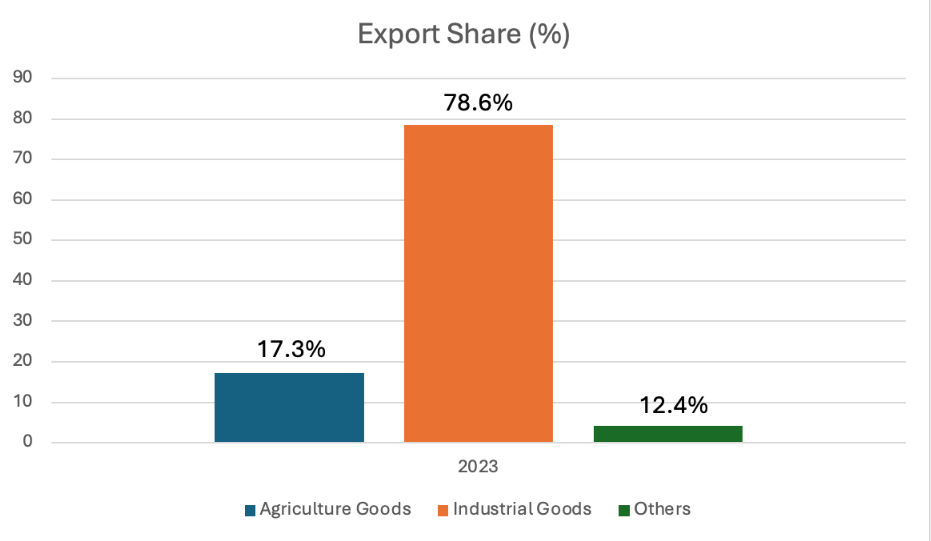
Officials stress the need to diversify and add value through exports of future food, organic products, and agricultural extracts to reduce reliance on low-processed goods and narrow markets.¹

Regional Agricultural Characteristics
The agriculture of Thailand varies significantly by region, each with distinct specialties and farming conditions:²
Region | Geography & Climate | Key Crops | Farming Practices & Other Activities |
Northern Region 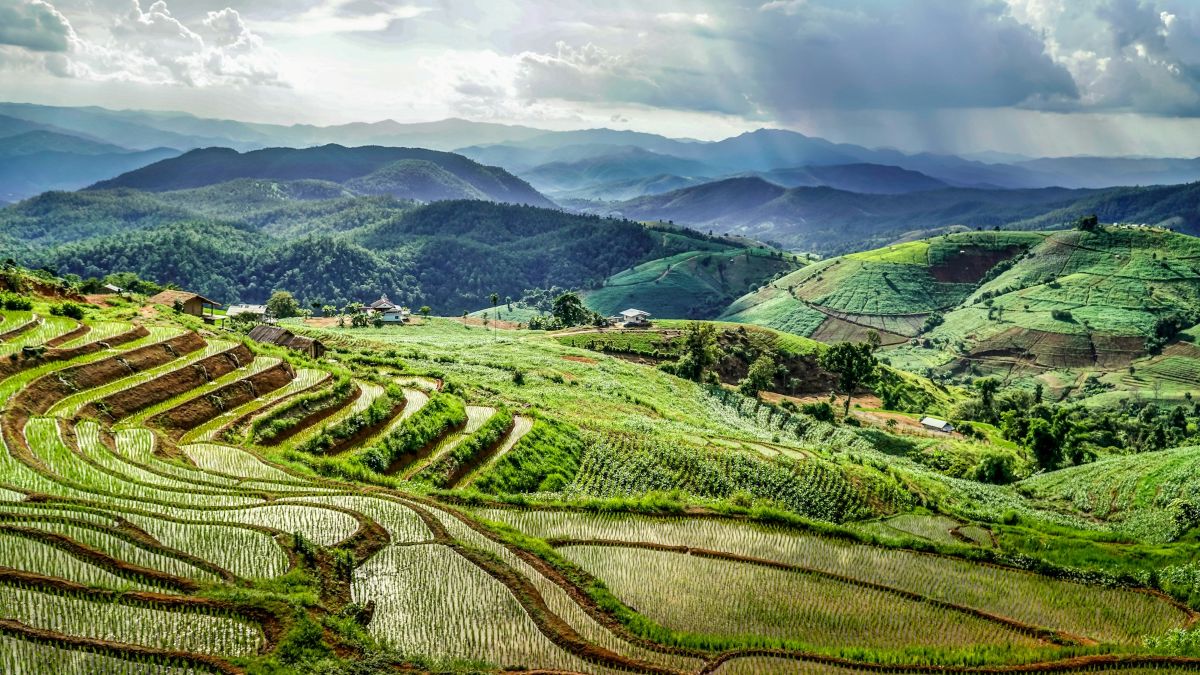 | Mountainous terrain, cooler temperatures, valleys ideal for temperate crops | Strawberries, plums, persimmons, kiwis, peaches, passion fruit | Terraced rice farming; expansion of coffee & fruit; leader in organic & sustainable farming |
Central Plains 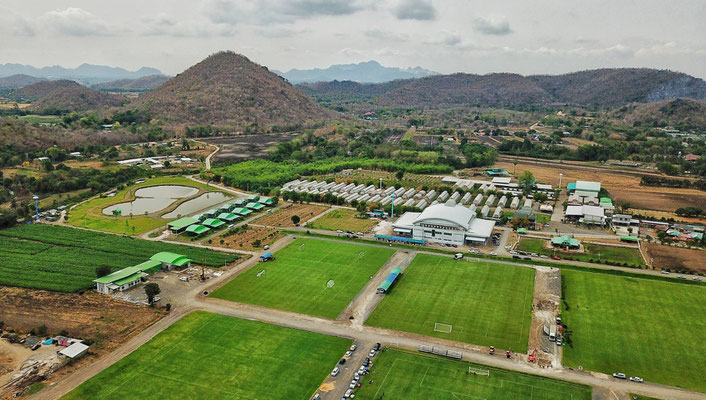 | Fertile lowlands, extensive irrigation; Thailand’s agricultural heartland | Rice (main crop), sugarcane, vegetables, rubber trees | Large-scale commercial farming; widespread modern technologies; aquaculture (fish, shrimp) |
Northeastern (Isan) 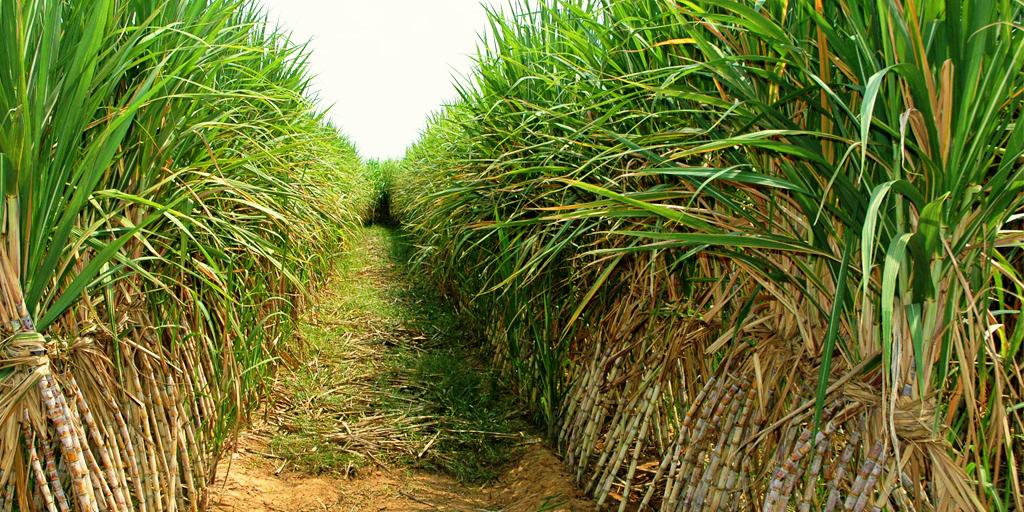 | Hot and dry; poor sandy soil; long rainy seasons | Glutinous rice, cassava, sugarcane, corn, pineapple, longan, coconut, rubber trees | Livestock farming (cattle, poultry); drought-resistant crops; herbal plants, feed corn, cotton important culturally & economically |
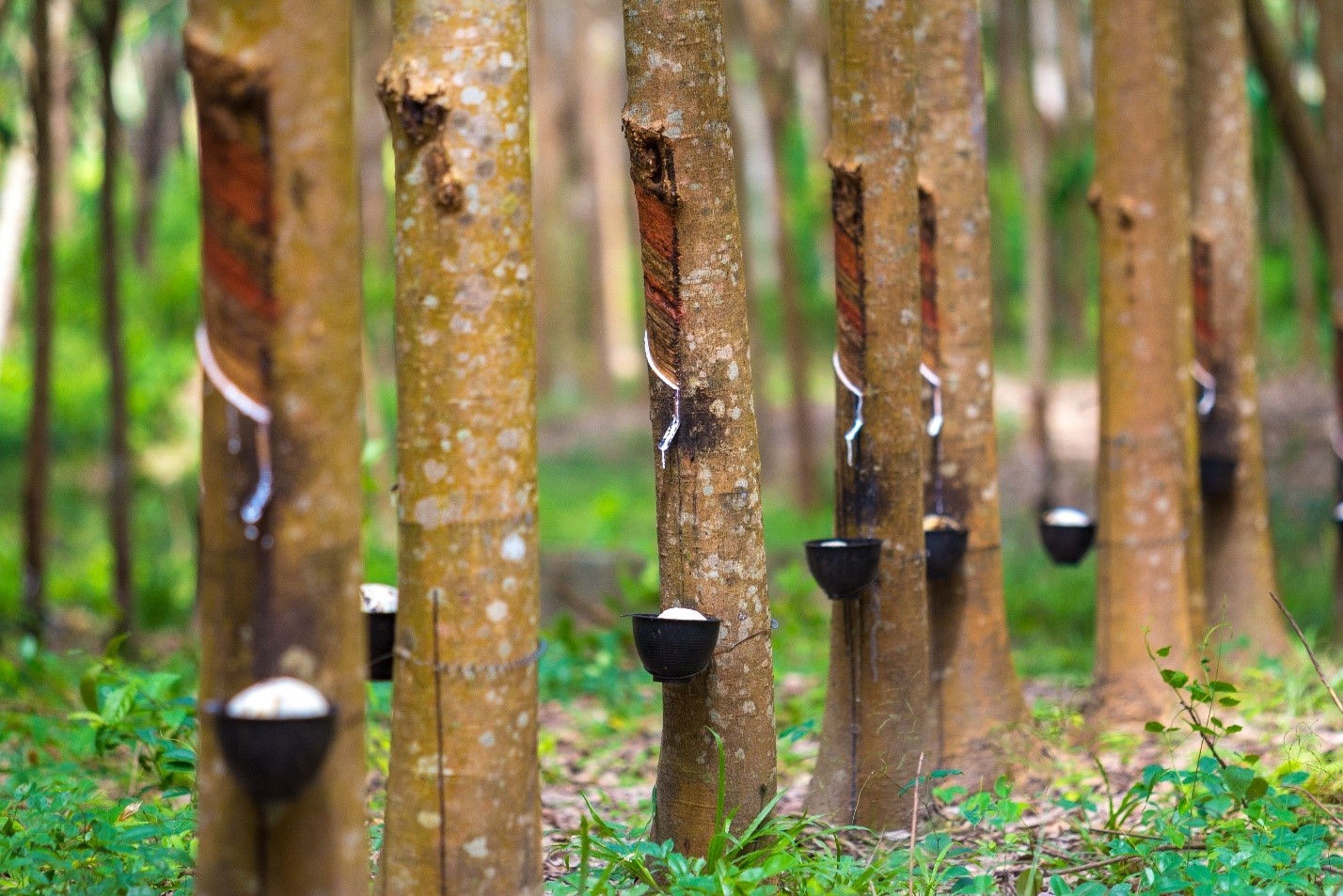
Southern Region 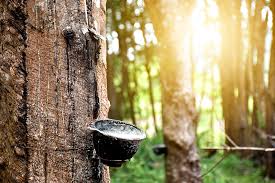 | Tropical climate with high rainfall and year-round warmth | Rubber, oil palm, tropical fruits (durian, rambutan, mangosteen) | Fisheries & aquaculture; mangrove forests; mixed-garden systems in rural areas |
Major Agricultural Products
Thailand’s agriculture industry produces diverse crops meeting both domestic and international demand. The country’s geography and climate make it ideal for agriculture, with crops serving not only domestic consumption but also providing significant household and national income. These key crops are termed “economic crops” as they support millions of livelihoods and generate substantial export revenue.³
Major Economic Crops Today:
Crop | Description | Export/Use | Key Regions / Notes |
Rice | Staple food and top export crop. | Exported to China, USA; popular for Jasmine (Hom Mali), glutinous, and white rice. | Competes with Vietnam; preferred for high quality. |
Rubber | Second most important crop. | Used in tires, condoms, asphalt; exported raw & processed. | World’s top exporter (30% global share); originally southern crop, now also in Northeast. |
Sugarcane | Major processed export. | Turned into sugar and biofuel. | Grown in Nakhon Sawan, Udon Thani, Kanchanaburi; 2nd largest exporter after Brazil. |
Cassava (Tapioca) | Grown for industrial use. | Animal feed, ethanol, flavoring. | High global demand from China, EU, US; easy to grow across many provinces. |
Oil Palm | Processed into palm oil. | Exported and used domestically. | Popular for low maintenance; regulated to avoid oversupply. |
Types of Economic Crops:
Category | Description | Examples |
Field Crops | Easy to manage, large-scale, seasonal rotation. | Rice, sugarcane, cassava, beans, corn, oil palm, tobacco. |
Horticultural Crops | Includes vegetables, fruits, flowers. | Durians, vegetables, decorative plants. |
Economic Trees | Long-term crops, used for timber and materials. | Rubber, teak, mahogany, eucalyptus, bamboo. |
Future Economic Crops:
Crop | Description | Uses |
Chili Peppers | Fast-growing (2–3 months). | Sold fresh, or processed into powder, sauce. |
Kim Sung Bamboo | Multipurpose bamboo. | Shoots, fuel, aquaculture. Possible rubber alternative. |
Macadamia | Growing popularity. | Nuts, oil, soap. |
Cocoa | Sustainable potential crop. | 80% consumed domestically; 20% exported. |
Thailand’s Agricultural Export Highlights (2024)
The Office of Trade Policy and Strategy (OTPS) revealed key statistical highlights of Thai agricultural exports for 2024, showing remarkable growth and diversification:⁴
Overall Export Performance
- Total exports: USD 300.5 billion (+5.4%)
- Agri & agro-industrial exports: USD 52.2 billion (+6.0%) – First time exceeding USD 50 billion
Agricultural Products
- Export value: USD 28.8 billion (+7.5%)
- Top products representing 88% of agricultural exports: Fresh/frozen/dried fruits, Rice, Rubber, Chicken, Cassava products
- Top markets accounting for 62% share: China, Japan, USA, Malaysia, Indonesia
- Fastest growing exports: Seafood (+87%), rubber (+37%), rice (+25%), spices (+23%)
- Fastest growing markets: Vietnam (+79%), Senegal, Iraq, Philippines, Italy
Agro-Industrial Products
- Export value: USD 23.4 billion (+4.1%)
- Top products representing 60% of agro exports: Canned seafood, Pet food, Ready-to-eat meals, Refined sugar, Processed fruits
- Top markets: USA, China, Japan, Cambodia, Myanmar
- Fastest growing products: Pet food (+23%), molasses, dairy, processed fruits
- Fastest growing markets: UAE, Canada, Australia, USA, UK
Key Issues & Recommendations Officials stress the need to address heavy reliance on few products and markets, with China, USA, and Japan representing 44% of exports. Recommendations include diversifying export products, promoting high-value processed and GI-certified goods, and investing in technology, quality improvements, and market expansion to reduce risks from trade tensions.
Agricultural Technology and Innovation
Modern Thailand agriculture increasingly incorporates advanced farming technologies. Smart farming practices help optimize resource use and increase yields. Government support for agricultural innovation helps farmers adopt new technologies while maintaining traditional farming wisdom. Precision farming techniques, drone technology, and automated systems improve efficiency.
In 2023, the agricultural machinery market experienced decline due to El Niño’s impact on yields, weak purchasing power from high household debt, and tighter leasing conditions. However, growth is expected over the next 1–3 years, driven by better weather conditions, economic recovery, and environmental regulations encouraging modern machinery adoption.⁵
Sector Outlook:
- Tractor Manufacturers: Expected revenue growth due to high-tech machinery demand; export opportunities remain strong, especially for small-medium tractors, as Thailand serves as a key ASEAN production hub
- Other Machinery Manufacturers: Demand will grow, but competition will intensify, especially from large importers and versatile tractor makers, pressuring smaller SME producers
- Distributors/Importers: Business growth expected with market expansion, but success depends on brand strength and technology level. Dealers of popular, high-tech brands are positioned to outperform the market
Market Research Value in Agriculture
Agricultural research in Thailand goes beyond crop statistics. The business questions that bring agritech companies, food processors, and agribusiness investors to us are specific:
For agritech companies and smart farming Thailand providers: Why do Thai farmers express interest but delay purchase? What operational anxieties and family decision dynamics determine adoption? Our drone adoption research revealed that business continuity fears — not price — were the primary barrier for smallholder rice and cassava farmers. [Read the full case study →]
For food processors and agricultural input suppliers: Which distribution channels reach provincial farmers effectively? How do purchasing decisions differ between Central Plains commercial operations and Isan smallholders? What certification or quality signals matter to Thai agricultural buyers?
For agribusiness investors and market entry teams: What is the realistic addressable market for a new agricultural product or service? Who are the key opinion leaders and decision-makers in Thai farming communities? How does the regulatory and cooperative landscape affect market access?
These are not questions that export statistics answer. They require qualitative immersion, stakeholder mapping, and fieldwork with the people who make decisions at farm level.
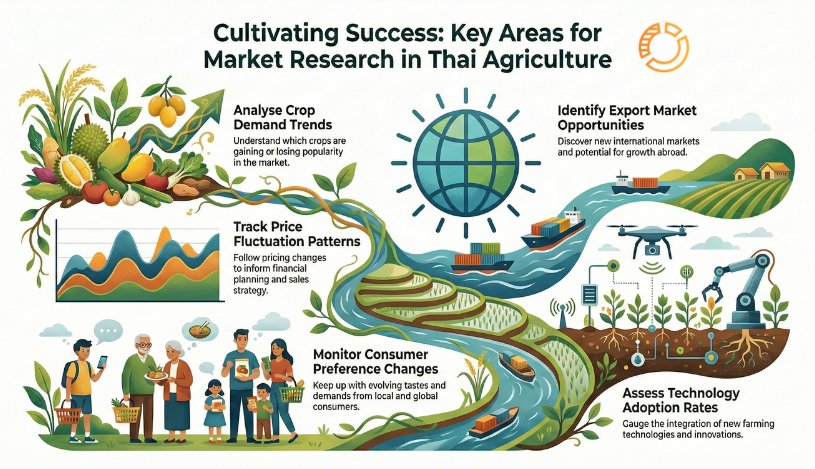
Market research particularly benefits:
- Agribusiness investors
- Agricultural technology providers
- Export-oriented producers
- Processing facilities
- Agricultural service providers
Real-World Application: Drone Adoption Research
Bridging the Adoption Gap: Agricultural Drone Research in Thailand
When a leading drone manufacturer couldn’t understand why Thai farmers attended product demonstrations but refused to buy, standard surveys couldn’t provide answers. Through ethnographic farm visits and intergenerational family interviews across Central and Northeastern provinces, we uncovered the real barrier: farmers feared mechanical failure during critical harvest windows more than they valued cost savings.
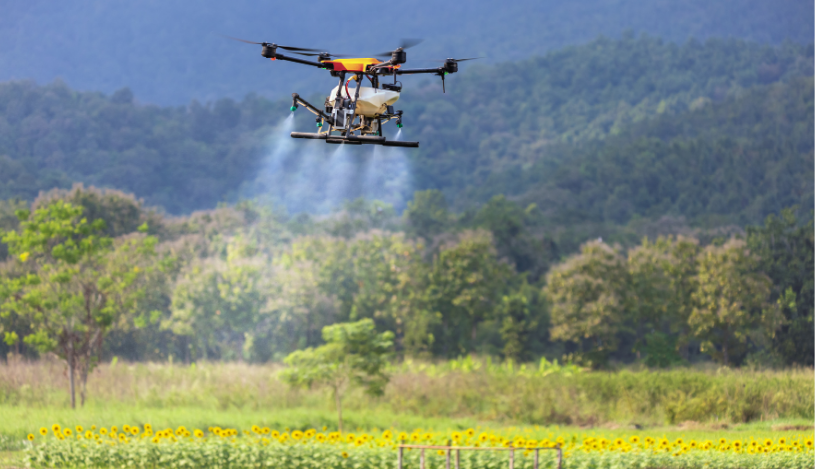
By revealing these hidden operational anxieties and family decision-making dynamics, the research enabled the client to pivot from feature-focused marketing to addressing business continuity concerns—leading to significant improvements in sales conversion.
Market Access and Export Opportunities
The Thailand agriculture industry maintains strong export positions in several key products. International market access continues expanding through trade agreements and quality improvements. Thai agricultural products enjoy strong reputations in global markets, particularly in Asian countries, with established trade relationships supporting continued growth.
Sustainable Development
Agriculture in Thailand faces environmental challenges requiring sustainable solutions. Water management, soil conservation, and climate change adaptation represent key focus areas. Many farmers now implement organic farming practices and sustainable water usage methods. Environmental concerns increasingly influence farming practices and crop selection, with government support encouraging environmentally responsible agricultural development. Sustainability and ESG research supports farmers and agribusinesses in implementing environmentally responsible practices that meet international standards.
Future Outlook
Thailand’s agriculture industry continues evolving to meet changing market demands. Investment in agricultural technology and infrastructure supports sector modernization. Training programs help farmers adapt to new farming methods while maintaining productivity.
Economic crops remain vital for Thailand’s agriculture-based economy. Understanding and promoting these crops can increase income for farmers and enhance national development. Future opportunities lie in diversifying into emerging crops that meet global demand while maintaining Thailand’s competitive advantages in traditional agricultural products.
Plan Your Agricultural Research in Thailand
Planning to enter Thailand’s agricultural market or launch an agritech product for Thai farmers?
Iconic Research conducts agricultural research across the value chain — from farmer adoption studies and agribusiness feasibility to supply chain mapping and consumer preference research for food processors. Our ethnographic fieldwork reaches smallholder farmers in Central, Northeastern, and Northern provinces.
[Discuss your agricultural research brief →]
Conclusion
The question “Is Thailand a farming country?” finds its answer in the nation’s strong agricultural foundation and continuing development. Thailand’s agriculture industry demonstrates remarkable resilience and adaptability, maintaining its importance in the national economy while embracing modern farming practices.
For farmers, investors, and industry participants, understanding Thailand’s agricultural landscape proves crucial for success. The sector continues offering opportunities while adapting to meet future challenges through innovation and sustainable practices. Success requires combining traditional agricultural wisdom with modern farming technologies and market understanding.
References
- Trade Policy and Strategy Office. “Thailand Agricultural Export Analysis 2024.” https://tpso.go.th/news/2402-0000000014
- QYield. “Regional Agriculture in Thailand.” https://www.qyield.com/article/view.php?id=33
- Agricultural Research Development Agency. “Economic Crops in Thailand.” https://www.arda.or.th/detail/6166
- Trade Policy and Strategy Office. “Agricultural Export Performance 2024.” https://tpso.go.th/news/2502-0000000023
- Krungsri Research. “Agricultural Machinery Industry Outlook 2024-2026.” https://www.krungsri.com/th/research/industry/industry-outlook/agriculture/agricultural-machinery/io/agriculture-machinery-2024-2026
If you wish to quote any information from this article, please kindly cite the source along with the link to the original article to respect copyright. |
 |
Iconic Research Thailand Your trusted partner in market research and consulting across Thailand and Southeast Asia. Headquartered in Bangkok, we provide research-driven insights across the Philippines, Malaysia, Indonesia, Singapore, Laos, and Vietnam. We help businesses navigate Thailand's market complexities through consumer insights, market entry strategy, and trend foresight. Contact us if you have any queries! (+66)888 954 954 |
Contact us
We always looking for new and exciting opportunities. Let’s connect.
Related posts
 Growth Strategy: The Expansion Decisions That Need Evidence
Growth strategy is the set of decisions about where a company expands next. Only 25% of companies grow sustainably — the difference is evidence, not ambition.
9 min read Brand Strategy: The Decisions That Should Be Built on Evidence
Brand strategy is the set of decisions that determine how a brand competes. Those decisions only pay off when they’re built on consumer evidence — not a workshop.
11 min read Key Opinion Leader: What Thai Brands Should Research Before, During, and After a KOL Campaign
Platform metrics mislead brands choosing and measuring KOLs in Thailand. A research-first look at what to verify before, during, and after a campaign.
10 min read