
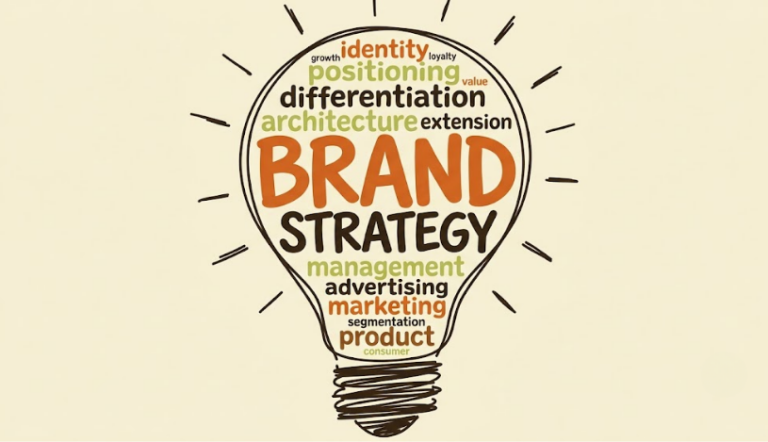
Brand strategy is the set of decisions that determine how a brand competes — where it positions, how it differentiates, how its portfolio is structured, and when it extends. It is not a logo, a campaign, or a slide deck. Each decision has a right answer that lives in consumer evidence, not in a workshop, and the brands that win measure what consumers actually perceive and value before they commit rather than assuming it after.
Table of Contents
- What Brand Strategy Actually Is (and Isn’t)
- The Core Brand Strategy Decisions
- Where Brand Strategy Goes Wrong
- Iconic Research’s Brand Work in Practice
- How Iconic Approaches Brand Strategy Research
- Brand Strategy in Thailand and ASEAN
- Conclusion
- References
Brand strategy is the set of decisions that determine how a brand competes — not the logo, not the campaign, not the slide deck that often gets mistaken for it. Those decisions only pay off when they are built on consumer evidence rather than intuition. The point is visible in the market: when Campaign Asia surveyed more than 10,000 Southeast Asian consumers for its 2025 brand rankings, Lazada emerged as Thailand’s most loved brand, outscoring Shopee 84% to 71.6% across measured dimensions including awareness, purchase frequency, and recommendation [1].
That position was earned on data, not declared in a boardroom. As a research firm working with brands entering and competing across Thailand and ASEAN, Iconic Research sees the same pattern repeatedly: brand strategies built on assumption rather than evidence, and corrected only once the market has already made the cost of the guess visible. This article examines the core brand strategy decisions every brand faces, why evidence consistently beats intuition in making them, and how a research-led process works — with particular attention to what changes in Thailand and the wider ASEAN market.
What Brand Strategy Actually Is (and Isn’t)
The most useful brand strategy definition is also the narrowest: it is the set of choices about how a brand competes for a position in the consumer’s mind. That is distinct from two things it is routinely confused with. Brand identity is the expression — the visual and verbal system through which the brand presents itself; brand identity strategy decisions sit downstream of, not in place of, the competitive choices. Brand marketing strategy is the activation — the media, channels, and campaigns that communicate the position once it is set.
The common and expensive error is treating a refreshed visual identity or a clever campaign as “the strategy.” Both are executions. Neither answers the prior question of where the brand should compete and on what basis it expects to win — and that question is answered with evidence about consumers, not with creative craft.
Brand strategy is often pictured as a wheel — and there are several, from the brand essence wheel to the brand identity wheel to the various framework diagrams that circle a brand’s purpose, values, personality, and visual identity. They differ in their spokes, but they share a shape: a brand’s essence at the centre, its means of expression around the rim. What none of them really contain is the competitive decision layer — where to position, how to differentiate, how to structure the portfolio, when to extend. The wheels describe what a brand is made of and how it presents itself; they are largely silent on the choices that determine whether it wins, and that decision layer is the table below.
The Core Brand Strategy Decisions
The major brand strategy decisions are finite, and each maps to a specific kind of research. The value of laying them out this way is that every decision has an answer that already exists in consumer data, waiting to be measured rather than debated.
Brand strategy decision | The question it answers | The research that informs it |
Where do we win in the consumer's mind? | Perception mapping, positioning research | |
Differentiation | What makes us the only choice, not just a choice? | Competitive and consumer research |
Architecture | How should the portfolio be structured? | Brand architecture / portfolio research |
Extension | Can the brand credibly stretch to a new category? | Concept testing, demand research |
Growth | Where does the next demand come from? | Segmentation, market research |
The right-hand column is not abstract. Each method in it — perception mapping, competitive studies, concept testing, segmentation — is research Iconic Research runs for brands making these exact decisions, drawing on qualitative and quantitative approaches and concept testing selected to fit the decision rather than a house template.
Each row is a bet until research settles it. A brand differentiation strategy asserted without competitive perception data tends to claim ground the brand does not actually hold; a brand extension strategy launched without concept testing stretches the brand into a category consumers do not grant it permission to enter. The same applies to brand growth strategies, which depend on knowing where unmet demand sits before deciding where to invest. Every brand strategy decision in the table has a measurable answer, and the cost of guessing rises with the size of the commitment behind it. Brand awareness strategy is the precondition that runs underneath all of them — a position no one can recall is not a position at all.
Where Brand Strategy Goes Wrong
This is where research-led brand strategy departs from the template-and-workshop approach that dominates the category. The clearest illustration is one of the most documented cases in marketing. Coca-Cola’s Teen Attitude and Usage Study found that teenagers saw the brand as “trusty but dusty” — their parents’ drink — with only 13% considering it unique [3]. That single perception finding, not a creative hunch, reset the brand’s strategy toward reconnecting with younger consumers. The strategy followed the evidence; it did not precede it.
The principle has only hardened. McKinsey’s 2025 analysis concludes that simple methods of predicting consumer behaviour are now insufficient, and that companies need a 360-degree view of their consumers before making the decisions that depend on it [2]. Brand strategy examples that endure share this trait: the decision was grounded in measured consumer reality. The alternative — a positioning workshop that produces conviction without data — feels like strategy and behaves like a guess. The difference does not show up in the deck. It shows up in the market, eighteen months later.
Iconic Research’s Brand Work in Practice
Iconic Research’s own work follows this sequence. For a global diabetes-care brand strongly associated with glucose monitoring, the strategic question was whether that narrow association capped the brand’s potential — or whether it could extend into broader chronic-care management without losing the trust of the doctors who prescribe it. Iconic Research ran structured in-depth interviews with GPs, endocrinologists, and nurses, testing brand elasticity, alternative branding architectures, and adoption drivers. The research showed how far the brand could stretch before credibility eroded, and which architecture preserved trust in primary care — turning a high-stakes extension decision into an evidence-based call rather than a bet.
The same discipline runs through Iconic’s brand work across categories. Positioning and visual identity testing in Thailand’s payment sector resolved a positioning decision against measured consumer response rather than internal preference. And a rebranding and positioning study for a DOTA 2 esports property grounded a repositioning in audience evidence rather than assumption, testing tournament names and visual directions with Thai fans before the organiser committed. Each maps to a decision in the table above — extension and architecture, positioning, and repositioning — and each replaced an internal judgment call with measured consumer reality.
How Iconic Approaches Brand Strategy Research
A credible brand strategy process is organised around research stages, not creative ones — and Iconic Research starts from the commercial decision, not the method. The question — whether to reposition, extend, restructure a portfolio, or defend a price premium — dictates whether the answer needs qualitative depth, quantitative scale, or both, rather than a fixed sequence applied to every brief. Each study is calibrated to the Thai and ASEAN context the brand actually operates in, not a global benchmark imported wholesale, and the output is a decision brief tied to the question that prompted it, not a deck of charts left for the client to interpret.
This is what separates a brand strategy framework from a downloadable canvas: the stages look procedural, but the discipline is evidentiary — at each step the question is what the data shows, not what the room believes. Brand development strategies built this way produce decisions that hold up under competitive pressure, which is the difference between research that designs and runs the brand work behind a strategy and research that simply describes a market.
Brand Strategy in Thailand and ASEAN
A brand strategy imported intact from a Western headquarters tends to fail in Thailand for structural reasons, not cosmetic ones. Endorser credibility carries disproportionate weight, and a poorly matched ambassador damages a brand here more than in most markets. Brand perception varies sharply between Bangkok and upcountry consumers, so a single national position frequently describes neither. And competitor entry — Chinese brands in particular — compresses the window to defend a position across electronics, automotive, and FMCG categories. These are not abstract observations; they are the variables Iconic Research measures directly in fieldwork across Thailand and the wider ASEAN markets, where running consistent studies in multiple countries is what makes the differences between them visible rather than assumed.
The Campaign Asia data makes the point that Thai consumers rank brands on their own terms: Adidas outscores Nike locally (77.7% to 74.3%) despite Nike’s larger global stature, and Lazada leads Shopee among Thai consumers even where the order reverses elsewhere [1]. Prophet’s analysis of Southeast Asia reaches a parallel conclusion — sustained growth comes from integrating brand-building with demand generation for young, digitally native consumers, fuelled by data and personalisation rather than brand assertion alone [4]. The local mechanism beneath this is trust: a study of a Thai commercial bank found that brand trust is a significant driver of brand loyalty, built through sustained relationship and engagement rather than communication volume [5]. The same logic extends to b2b brand strategy and corporate branding strategy, where buying decisions are slower, more relational, and even more dependent on measured trust than consumer categories. None of this is visible from a Western template — it is visible only in Thai consumer research.
Conclusion
Brand strategy is a series of bets, and research is what turns them into informed decisions. The brands that win in Thailand and ASEAN are the ones that ground positioning, differentiation, and portfolio choices in what consumers actually think — measured, not assumed. The decisions do not get easier with a better framework; they get safer with better evidence.
Frequently Asked Questions
What is brand strategy?
Brand strategy is the set of decisions that determine how a brand competes — positioning, differentiation, portfolio architecture, and extension. It is distinct from the logo or campaign, which express the strategy rather than constitute it.
What are the major brand strategy decisions?
The core decisions are positioning, differentiation, architecture, extension, and growth. Each answers a different competitive question and each has an answer that lives in consumer evidence rather than in management opinion.
What is the difference between brand strategy and brand marketing strategy?
Brand strategy decides where and how a brand competes for a position in the consumer's mind. Brand marketing strategy is the activation — the channels and campaigns that communicate that position once it has been set.
Why should brand strategy be based on research?
Because every brand strategy decision is a bet until evidence settles it, and the cost of guessing rises with the commitment behind it. Research measures what consumers actually perceive before budget is committed.
How is brand strategy different in Thailand?
Endorser credibility, sharp Bangkok–upcountry perception differences, and fast competitor entry mean an imported template frequently describes the wrong market. A position that holds in Thailand has to be measured in Thailand.
Can brand strategy research test whether a brand can enter a new category?
Yes. Brand elasticity and architecture testing measures how far a brand can stretch before its credibility erodes and which portfolio structure preserves trust — turning a high-stakes extension decision into an evidence-based call.
References
[1] Campaign Asia-Pacific (Pureprofile). Thailand’s Top 50 Brands 2025 (reported 2025–2026). https://www.campaignasia.com/article/thailands-top-50-brands-2025/503009
[2] McKinsey & Company. State of the Consumer 2025: When Disruption Becomes Permanent (June 2025). https://www.mckinsey.com/industries/consumer-packaged-goods/our-insights/state-of-consumer
[3] Coca-Cola Teen Attitude and Usage Study, reported in The Market Research Society, “US Coca-Cola — Persuading Teens to Share a Coke” (case study). https://www.mrs.org.uk/pdf/US_COCA_COLA_-_FINAL_TWO.pdf
[4] Prophet. The Brand and Demand Love Story: Unlocking 2025 Growth in SEA (April 2025). https://prophet.com/2025/04/unlocking-2025-growth-in-sea/
[5] Wongsansukcharoen, J. (2022). Effect of community relationship management, relationship marketing orientation, customer engagement, and brand trust on brand loyalty: The case of a commercial bank in Thailand. Journal of Retailing and Consumer Services, 64, 102826. https://doi.org/10.1016/j.jretconser.2021.102826
If you wish to quote any information from this article, please kindly cite the source along with the link to the original article to respect copyright. |
 |
Iconic Research Thailand Your trusted partner in market research and consulting across Thailand and Southeast Asia. Headquartered in Bangkok, we provide research-driven insights across the Philippines, Malaysia, Indonesia, Singapore, Laos, and Vietnam. We help businesses navigate Thailand's market complexities through consumer insights, market entry strategy, and trend foresight. Contact us if you have any queries! (+66)888 954 954 |
Contact us
We always looking for new and exciting opportunities. Let’s connect.
Related posts
 Growth Strategy: The Expansion Decisions That Need Evidence
Growth strategy is the set of decisions about where a company expands next. Only 25% of companies grow sustainably — the difference is evidence, not ambition.
9 min read Key Opinion Leader: What Thai Brands Should Research Before, During, and After a KOL Campaign
Platform metrics mislead brands choosing and measuring KOLs in Thailand. A research-first look at what to verify before, during, and after a campaign.
10 min read Customer Persona: Build One That Reflects Real Thai Consumers
Most Thai brands have customer personas built from assumptions. Research-backed personas reveal a different consumer — and drive different decisions.
9 min read