
Thai culture and behavior come into focus differently once you stop trying to translate them and start trying to read them. The language is where the logic lives.
Table of Contents
- Thai Is Built Like a Map, Not a Dictionary
- Four Thai Concepts That Don’t Exist in English
- Once You See It, You Can’t Unsee It
- Cultural Differences in Thailand — The Ones Nobody Puts in the Guidebook
- PhumPanya — Where We Go Deeper
- References
- Related Resources
Thai has a word for the instinct to avoid causing discomfort to others, even at the cost of not saying what you actually think. It’s called เกรงใจ — kreng jai — and it has no English equivalent. Neither does the concept of social reputation as something that can be literally given to another person. Or the expectation that work should carry some element of enjoyment, as a structural feature of how it’s done, not a bonus. These aren’t translation gaps. They’re evidence that Thai culture and behavior organised certain things differently — and left a record of it in the language.
Thai Is Built Like a Map, Not a Dictionary
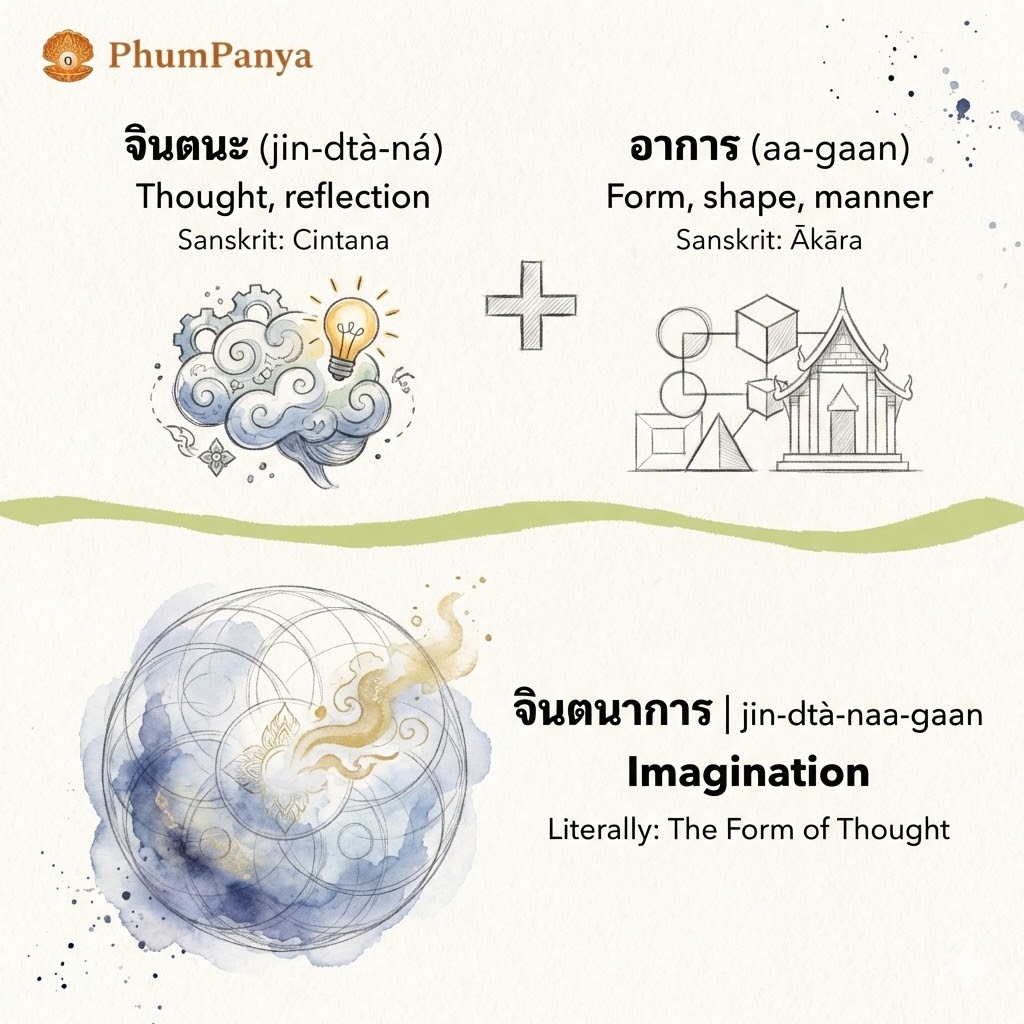
Thai words are often not words in the way English words are. They are compounds — a root verb or noun joined to another to create something richer than either part alone. Once you see the structure, you stop memorising vocabulary and start reading a logic.
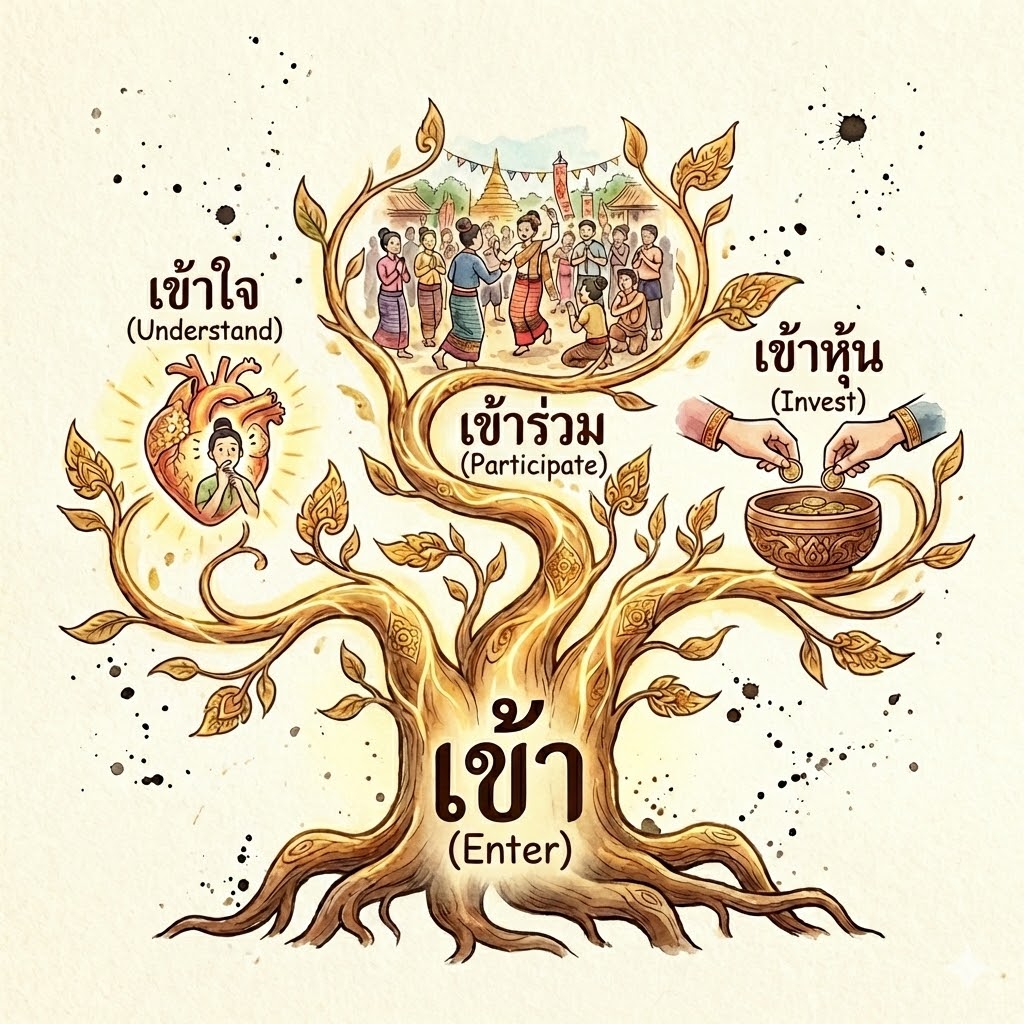
เข้า means to enter. ใจ means heart. Put them together and you get เข้าใจ — to understand, but literally, entering the heart. Understanding something in Thai is not a cognitive event. It is a relational one.
วาง means to place. ใจ means heart. วางใจ is to trust — literally, placing your heart somewhere. Trust is not assessed in Thai. It is extended. It is an act of placement.

This structure as the root of so many psychological and social concepts — is not a metaphor. It is an architecture. And once you see it, you read the language differently. For anyone who wants to go deeper into this system, PhumPanya’s piece on Thai verb roots does exactly what this paragraph describes — and is worth the detour.
Four Thai Concepts That Don’t Exist in English
เกรงใจ — Kreng Jai
เกรง means to be slightly in awe of, or to fear causing discomfort. ใจ is heart. เกรงใจ is the instinct to avoid placing a burden on another person — even when expressing your own needs would be entirely reasonable.
In practice, kreng jai is the Thai colleague who doesn’t mention the meeting room is too cold. The dinner guest who declines a second helping they genuinely want. The research participant who agrees with a framing they privately find wrong, because disagreeing would create discomfort — for the researcher, for the group, for the room.
This is not dishonesty. It is a different architecture of social consideration. In a culture shaped by kreng jai, avoiding imposition on others is not a suppression of self — it is the expression of a particular kind of care. Understanding this changes how you listen to Thai people. It also changes what you ask, and how, if you actually want to know what they think.
หน้า — Naa / Face
หน้า literally means face — the physical one. In social use, it carries something that English has no single word for: a structure of reputation, dignity, and relational standing that can be maintained, damaged, lost, or given to others.
เสียหน้า — face is damaged. Losing face is not an emotional event. It is a social one, with real relational consequences. ให้หน้า — giving face. An act of visible generosity that elevates someone in front of others.
The concept operates everywhere: in how Thais choose certain brands over others, in how feedback travels through organisations, in the gap between what is said in a meeting and what is decided afterwards. One of the more quietly fascinating implications — in a social system partly organised around face, what people say in public and what they actually believe can diverge not from deception, but from architecture.
สนุก — Sanuk
Sanuk translates as fun. But that translation doesn’t carry what the word means as a cultural value.
Sanuk is the expectation — almost a requirement — that activities carry some element of enjoyment. Work without sanuk is not merely unpleasant. It signals that something is wrong with the work, or the environment, or the relationship. Celebrations are built around it. Service culture is shaped by it. Difficult conversations benefit from moments of lightness not because Thais avoid seriousness, but because sanuk is how you signal that the relationship is intact even when the subject is hard.
For anyone trying to understand Thai consumer experience, sanuk is the variable that explains why the emotional register of an interaction often matters more than its functional outcome. A transaction that felt enjoyable will be remembered differently from one that was efficient but flat — regardless of what changed hands.
บุญคุณ — Bunkhun
บุญ is merit — virtue accumulated through good action. คุณ carries meanings of goodness, quality, benefit. Together, bunkhun describes a form of relational debt that has nothing to do with money.
When someone does something significant for you — your teacher who believed in you, the employer who took a chance, the person who helped in a moment of genuine need — bunkhun is what you carry forward. Not as obligation in the Western sense, but as a lasting bond that shapes loyalty, gratitude, and the expectation of reciprocal care across time.
This explains something that regularly surprises people arriving from more transactional professional cultures: relationships in Thailand are not transactional by default. They are relational first. Bunkhun is why long-term loyalty here can run deeper than a contract — and why breaking it lands differently than ending a business arrangement.
Once You See It, You Can’t Unsee It
Understanding kreng jai doesn’t just explain Thai social behavior — it reframes what you’re hearing in almost any conversation. The agreement you thought was agreement. The silence that followed a question. The answer that came back complete and warm and slightly beside the point. None of these require a new methodology. They require a different kind of attention.
The same is true of face, sanuk, and bunkhun. Once the concepts are legible, the texture of ordinary interactions changes. You notice the moment someone is being given face across a table. You notice when a room has sanuk and when it doesn’t, and what that signals about the relationship underneath the meeting. You notice the particular quality of loyalty that bunkhun produces — how different it is from contract-based commitment, and how much more durable.
For anyone working in Thailand — in research, in business, in any context where understanding what Thai people actually think matters — this kind of attention is what good qualitative research is built on. Not a different questionnaire. A different way of listening.
Cultural Differences in Thailand — The Ones Nobody Puts in the Guidebook
There are patterns of cultural difference in Thailand that don’t make it into the etiquette guides, because they are harder to reduce to a list of rules.
The gap between Bangkok and provincial Thailand is real and significant — not just geographical but cultural, linguistic, and attitudinal. Thai culture is not monolithic, and treating it as a single set of values produces a picture as incomplete as assuming all European cultures share the same social logic.
Age and seniority create genuine social architecture. Who speaks first, who sets the register of a conversation, who can introduce a topic that a junior wouldn’t raise — these are not formal conventions layered over a more egalitarian reality underneath. They are the operating system.
Time and planning work differently — not because Thais are disorganised, but because relationship responsiveness is often weighted above schedule adherence. Being available when someone needs you is a form of care. Holding rigidly to a plan when circumstances shift reads, sometimes, as placing the plan above the person.
Indirect communication is not evasion. It is a sophisticated system for maintaining relational harmony while still conveying meaning. The meaning is there. It requires a different kind of listening to find it.
PhumPanya — Where We Go Deeper
This curiosity led somewhere.
The same understanding that shapes how we listen in a focus group or read a consumer’s hesitation in an interview is what PhumPanya is trying to make visible to anyone who’s curious.
Frequently Asked Questions
What is kreng jai and why does it matter?
เกรงใจ (kreng jai) is the Thai instinct to avoid placing a burden or discomfort on others — even at the cost of not expressing your own needs or opinions. It matters in research, business, and everyday interaction because it means that agreement is not always agreement, and that what Thai people say in group settings may differ significantly from what they privately think.
What does sanuk mean in Thai culture?
สนุก (sanuk) means fun, but as a cultural value it describes the expectation that activities — including work, service, and social interaction — carry some element of enjoyment. In Thai culture and behavior, an interaction's emotional register often matters as much as its outcome. Sanuk is why warmth and lightness are not incidental to Thai service culture — they are structural to it.
What is face in Thai culture?
หน้า (naa) — face — refers to a social currency of reputation, dignity, and relational standing. It can be maintained, damaged, lost, or given to others. Understanding face explains why public and private positions diverge, why certain feedback methods work and others don't, and why some brand signals carry weight in Thailand that they wouldn't elsewhere.
What is bunkhun?
บุญคุณ (bunkhun) is the sense of relational debt created when someone does something significant for you — not financial debt, but a lasting bond of gratitude, loyalty, and obligation. It shapes how Thais relate to employers, teachers, and long-term relationships of all kinds, and explains why loyalty in Thailand often runs deeper than a formal agreement.
Why does language matter for understanding Thai culture?
Thai words for social and psychological concepts are often compound structures that reveal the logic underneath the concept. เข้าใจ (to understand) literally means "entering the heart." วางใจ (to trust) means "placing your heart somewhere." Reading the language structure is reading the cultural logic — which is why Thai culture and behavior make more sense when approached through the words themselves.
References
[1] Royal Institute of Thailand (2011). Royal Institute Dictionary. Royal Institute. https://dictionary.orst.go.th
[2] PhumPanya (2024). Thai Verbs: The Root System That Builds the Language. https://phumpanya.com/thai-verbs-the-root-system-that-builds-the-language/
[3] Komin, S. (1991). Psychology of the Thai People: Values and Behavioral Patterns. National Institute of Development Administration. https://www.nida.ac.th
[4] Holmes, H. and Tangtongtavy, S. (1995). Working with the Thais. White Lotus Press. https://www.whitelotuspress.com
[5] Iconic Research (2025). Consumer Behaviour in Thailand. https://iconicthai.com/understanding-the-thai-consumer-insights-and-trends/
Related Resources
- Consumer Behaviour in Thailand
- Qualitative Market Research
- Social Listening in Thailand
- Customer Experience in Thailand
- PhumPanya — Thai Language and Culture
If you wish to quote any information from this article, please kindly cite the source along with the link to the original article to respect copyright. |
 |
Iconic Research Thailand Your trusted partner in market research and consulting across Thailand and Southeast Asia. Headquartered in Bangkok, we provide research-driven insights across the Philippines, Malaysia, Indonesia, Singapore, Laos, and Vietnam. We help businesses navigate Thailand's market complexities through consumer insights, market entry strategy, and trend foresight. Contact us if you have any queries! (+66)888 954 954 |
Contact us
We always looking for new and exciting opportunities. Let’s connect.
Related posts
 Growth Strategy: The Expansion Decisions That Need Evidence
Growth strategy is the set of decisions about where a company expands next. Only 25% of companies grow sustainably — the difference is evidence, not ambition.
9 min read Brand Strategy: The Decisions That Should Be Built on Evidence
Brand strategy is the set of decisions that determine how a brand competes. Those decisions only pay off when they’re built on consumer evidence — not a workshop.
11 min read Key Opinion Leader: What Thai Brands Should Research Before, During, and After a KOL Campaign
Platform metrics mislead brands choosing and measuring KOLs in Thailand. A research-first look at what to verify before, during, and after a campaign.
10 min read